

For years, many companies assumed that good translation was enough to operate in international markets. In 2026, that assumption is no longer true. Today, the real difference is not only in linguistic quality, but in B2B language management as a strategic system that impacts operational continuity, regulatory compliance, and corporate reputation.
The difference between translating and managing language within an organization is similar to the difference between solving a one-time problem and designing a system that prevents that problem from happening again. A good translation solves a document. B2B language management solves processes, risk, and consistency over time.
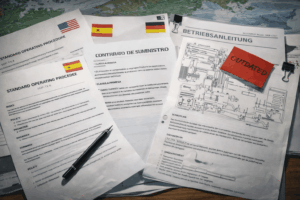
This is something that happens in the operational reality of companies like yours. Documents translated in different countries, different vendors using different terminology, regulatory updates not reflected in all versions of a procedure, contracts that are not aligned across languages, technical manuals that change but whose translations are not updated at the same time. The result is not a linguistic error, it is an operational risk.
That is why B2B language management is ultimately about control. Terminology control, document control, version control, quality control, and risk control. In regulated industries, for example, one inconsistent term across documents can lead to audit findings, approval delays, or legal issues. In industrial environments, terminology inconsistencies can lead to operational errors. In legal contexts, it can change the interpretation of a clause. Translating one document well does not prevent these problems if there is no management system behind it.
This is where language management connects directly with quality systems such as ISO 9001 and with specific translation standards such as ISO 17100, because both frameworks focus on controlled processes, traceability, risk management, and continuous improvement, not isolated efforts. When language management is integrated into a company’s quality system, translation stops being a tactical task and becomes a business management tool.
In practice, this means your company should not only ask who translates, but how your linguistic assets are managed. Your corporate glossaries, translation memories, terminology criteria, review processes, approval workflows, and document traceability are all part of a strategic asset that, when properly managed, reduces costs, reduces risk, and improves communication consistency across all markets.
B2B language management also has a direct impact on efficiency. When linguistic processes are organized, delivery times become more predictable, quality becomes consistent, and internal teams do not lose time correcting documents, responding to review comments, or reworking materials. What initially seems like a linguistic issue ends up being a productivity and time management issue within the organization.
In 2026, companies operating in multiple markets do not need more translations. They need more control, more consistency, and better decision-making. They need B2B language management.
Because translating a text well is good. But managing your company’s language correctly is what truly protects your operation, your reputation, and your growth.
Read our Privacy and Confidentiality Policy.